Roughly seventy percent of the housing in central Largo was built before 1980, and post-2010 construction is barely a rounding error. Add to that more than fourteen thousand mobile and manufactured homes across the Largo ZIP codes — one of the densest concentrations in the region — and you have a town where almost every job is a retrofit.
Two very different kinds of job
The 1950s to 1980s stick-built stock
Concrete block on slab, built before Florida had a meaningful energy code. Original attic insulation was thin, has settled further, and sits far below the R-49 to R-60 the Department of Energy now recommends for an uninsulated attic in this climate zone. The block walls themselves carry almost no insulating value, so the ceiling is where the whole job lives. In the 1970s and 80s homes the ducts run through the attic as well, which is why Duke pays separately to seal them.
Manufactured and mobile homes
This is a large part of what we do in Largo, and it is genuinely different work. The problems are underneath rather than overhead: degraded or fallen belly insulation, ducts running through that belly cavity where they leak into open air, and shallow roof cavities with almost no room for conventional insulation. Communities like Fairway Village, Palm Hill, Island in the Sun, Town & Country, Holiday Shores, Bel-Aire and Maple Leaf are all in this category.
Duke runs a separate rebate track for manufactured homes, including duct test and repair up to $450. A lot of owners assume they are excluded from utility programmes entirely. They are not.
With more than 28 percent of Largo residents aged 65 or over and a median age of nearly 51, a great many of these are fixed-income households where a summer electricity bill genuinely matters. We quote accordingly — if the payback is not there, we say so.
Duke Energy rebates
Pinellas County is Duke Energy Florida territory, and Duke pays considerably better than the utilities inland. It also pays on windows, which most Florida utilities do not.
- Attic insulation: up to $800, applied as an instant credit on the contractor’s invoice rather than a rebate you claim afterwards.
- Energy-efficient windows: up to $800. The glazing has to meet a hot-climate specification, and the rebate applies to east, west and south-facing windows — not north-facing, and not sliding glass doors or French doors.
- Duct test and repair: up to $450, also instant.
- Heat pump water heater: up to $800. Total programme value runs to roughly $3,800.
The order matters and it is where people lose the money. You must complete a free Home Energy Check — online, by phone or as a full in-home visit — and receive a qualifying recommendation before the work starts. You then have 24 months to complete it, and the installer has to be a Duke-approved contractor. Renters are eligible too. Duke completed 2,820 of these checks in Pinellas County in 2025, so it is a well-used programme, not a technicality.
The attic rebate is tiered by how bad your existing insulation is, with the target being R-38 — which is also what the building code prescribes for new construction in this climate zone. If your attic already measures well, you will not qualify, and we would rather tell you that at the estimate than after.
Neither fully coastal nor fully inland
Largo sits centrally in Pinellas County and touches water on two sides — the Intracoastal Waterway to the south-west and Tampa Bay to the north-east — with elevations from sea level to about 69 feet. That means genuine coastal exposure along the edges and none in the middle, and the right specification changes between them. Salt aerosol on the western side corrodes fasteners, flashing and soffit vents; degraded vent hardware makes attic temperatures worse.
Helene in September 2024 was a surge event across Pinellas, with more than 18,500 structures taking major damage county-wide and twelve deaths, all drownings. Milton followed two weeks later with 92 mph sustained winds in the county and a record 29 tornado warnings from the local weather service. Wet insulation from either does not dry out in this climate — it compacts, permanently loses its R-value and grows mould. Removal is the repair.
Before you commit to repairs, check Pinellas County’s 49 percent rule. If the cost of repair reaches 49 percent of the structure’s value, the home counts as substantially damaged and has to be brought up to current floodplain code — and the county includes donated materials and your own labour in that calculation.
Where we work
Across Largo — Downtown Largo and Central Park, Anona, Ridgecrest, Walsingham, Harbor Hills, Archwood-South Haven, Pinebrook Estates, Somerset Lakes, Bay Hills and Shipwatch Yacht Club — plus the manufactured home communities throughout the city.
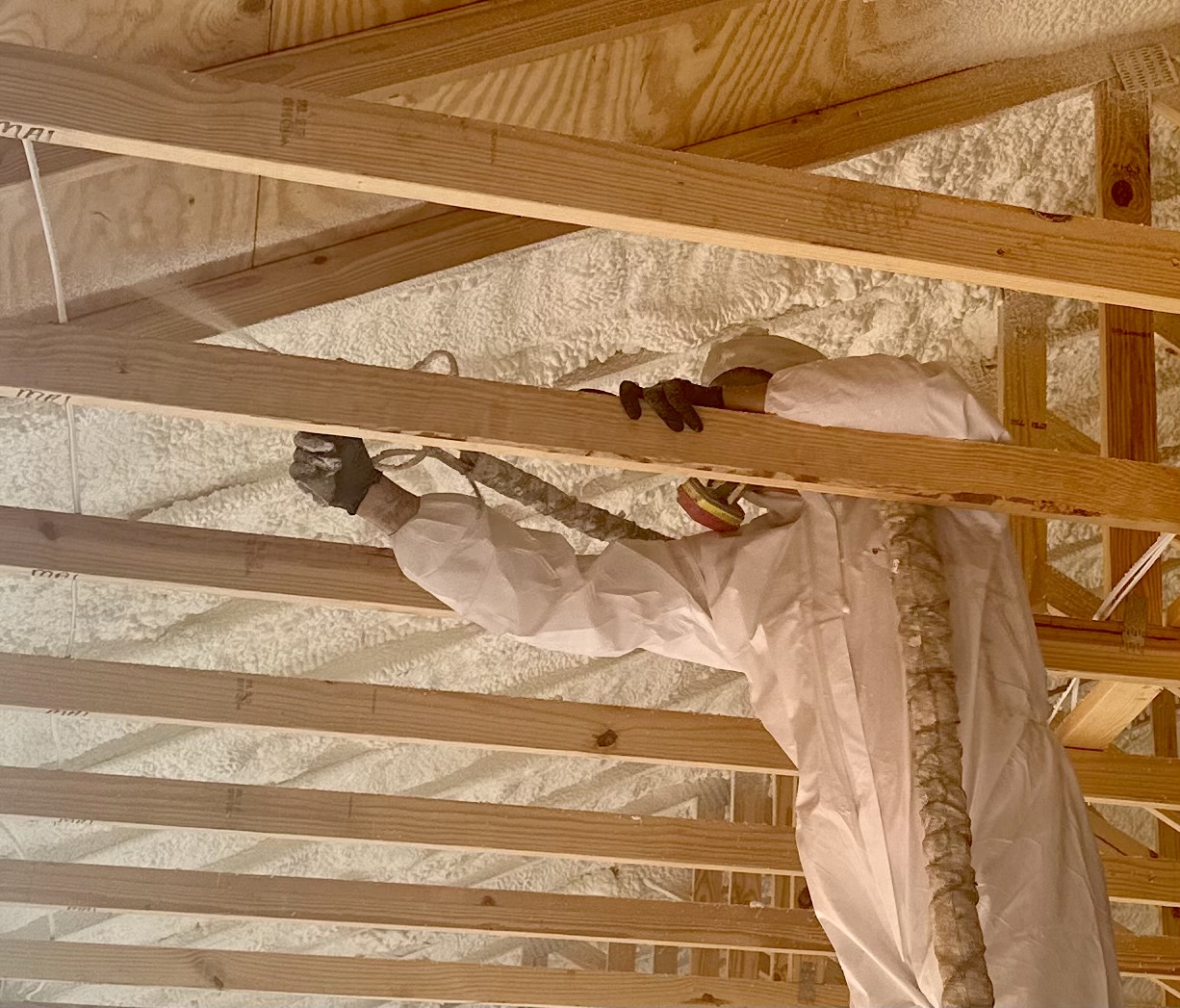
We install blown-in insulation and spray foam, handle insulation removal after storm damage, and fit energy-efficient windows and storm damage repairs.